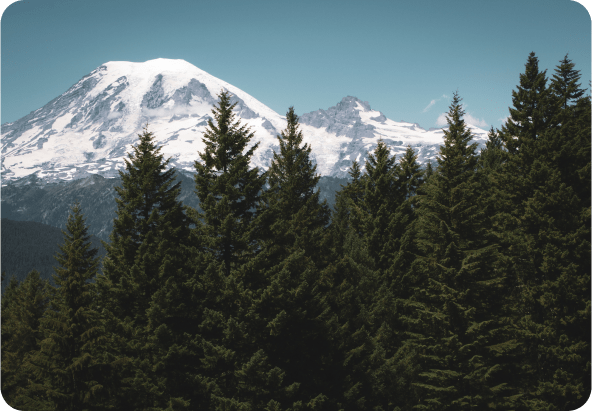
Almost immediately after starting out we encountered headwind, and it was an all day relationship. Up until now we had had following breezes and although we knew our luck would eventually change, until that change happens it is easy to forget. It didn't make the scenery any less beautiful, and we actually stopped more often to catch our breath. With very few cars to disrupt the setting, and a broad river sweeping down the valley, sometimes with rapids accenting the course, the Clark Fork is a stunning sight.

We had been warned of a construction zone on the road we were on, so we were prepared for some slow going. When we got to the site, traffic was being stopped in both directions by a crane hoisting a huge beam at a bridge crossing. As we were at the head of the line for almost 30 minutes, we struck up a conversation with the flagger who had stopped us. She was a very attractive young woman with a cheerful disposition and a good bit of patience. We talked about how hot it had been and she warned us to be vigilant about rattlesnakes along the construction zone. As we were just about ready to get going again she turned to me and asked:
"There is something I've been meaning to ask about. How exactly do you ride those things so it doesn't interfere with your parts?"
I thought, "my parts...my parts...can she mean...?" I was flabbergasted, but her question was in earnest, and very delicately put, and so I gave her an honest answer. The bicycle seat is perhaps the most intimate point of contact on a bike. Once you get the proper seat and get the angle and placement set correctly, it isn't too much of a problem. The irritation then becomes not one's parts, but of constant wear and chafe on the sitting bones, and that discomfort is gender neutral. At this point she was not looking me straight in the eye, and I think she was not exactly convinced by my explanation, but it's the honest truth. With that delicate matter settled, I mused that we are definitely in the nineties now, and it's not the eighteen nineties.
There was no finesse with the way we made it in to Missoula. With the wind pretty strong in our faces, and thunderstorms rumbling around us, I was impatient to get it done, and grumpy at how long it was taking, but as long as you're patient, you will eventually arrive.
This is a bustling small city. There are signs of stability and growth everywhere, which is generally a positive thing but it does have its downside. People are beginning to talk about transportation problems, which is often the first system to break under stress. My feeling is that the bicycle can offer an alternative for some, and it would provide some low cost breathing room until the planners can come up with a comprehensive solution.

Will Babcock described his approach to Missoula this way:
From Saltese, we expected to follow a wagon road, but the water was so high that we were compelled to keep to the railroad track as far as Iron Mountain. Across the roaring water of Clark's Fork we could see an excellent wagon road winding along the river bank, but no ferry could be found and we had to make the best of it and hit ties for twenty miles. From Iron Mountain, where we crossed the bridge, we found the roads excellent where they were not under water. In fact, all of the Montana roads, except for the steep grades and irrigation ditches, were excellent for wheeling. Not far from Superior, we had to leave the main road and take the old Mullan trail for seven miles in order to reach Grover's ranch -- seven of the worst miles we have found. I understand that Gen. Mullan, who projected the road for the government, in 1861, is still alive. That is not surprising at all, for a man who could build a road where he did might easily live forever. He was ambitious in the road building, and in some instances went heavenward for three miles at a stretch on 50 per cent grade. We could scarcely get our wheels up, and could not ride down. I am told that the Mullan road reaches from Fort Benton to Spokane, that all of the work was done by United States soldiers, and that 80 per cent of the appropriation was returned to the government. Several times we wished they had used more of it on the road.
Just before reaching Missoula we came to a river which we had to ford. We sometimes managed to cross on fences or logs, but it wouldn't work in this case, and the only alternative was to wade. Removing shoes and hose, rolling up our knickerbockers, and taking our bikes on our shoulders, we went across. The water surprised our pedal extremities somewhat, but did no damage.
At Missoula we stayed half a day, and were visited by a large number of the local wheelmen, who gave us urgent invitation to remain a few days in town, but after writing a few letters, reading the Sound papers, and developing our camera plates, we were ready to move on.
I shall remain in Missoula for a day, to take care of some business, and allow my legs to recover from eight days of cycling. I anticipate resting about one day each week (or maybe two half-days).
John and Chris, my two mates for the last week, are heading back home today, leaving me to go on alone. The trip begins in earnest from here.
102 difficult miles with a warm welcome from our hosts at the end.
Enjoying the rest.
Dennis